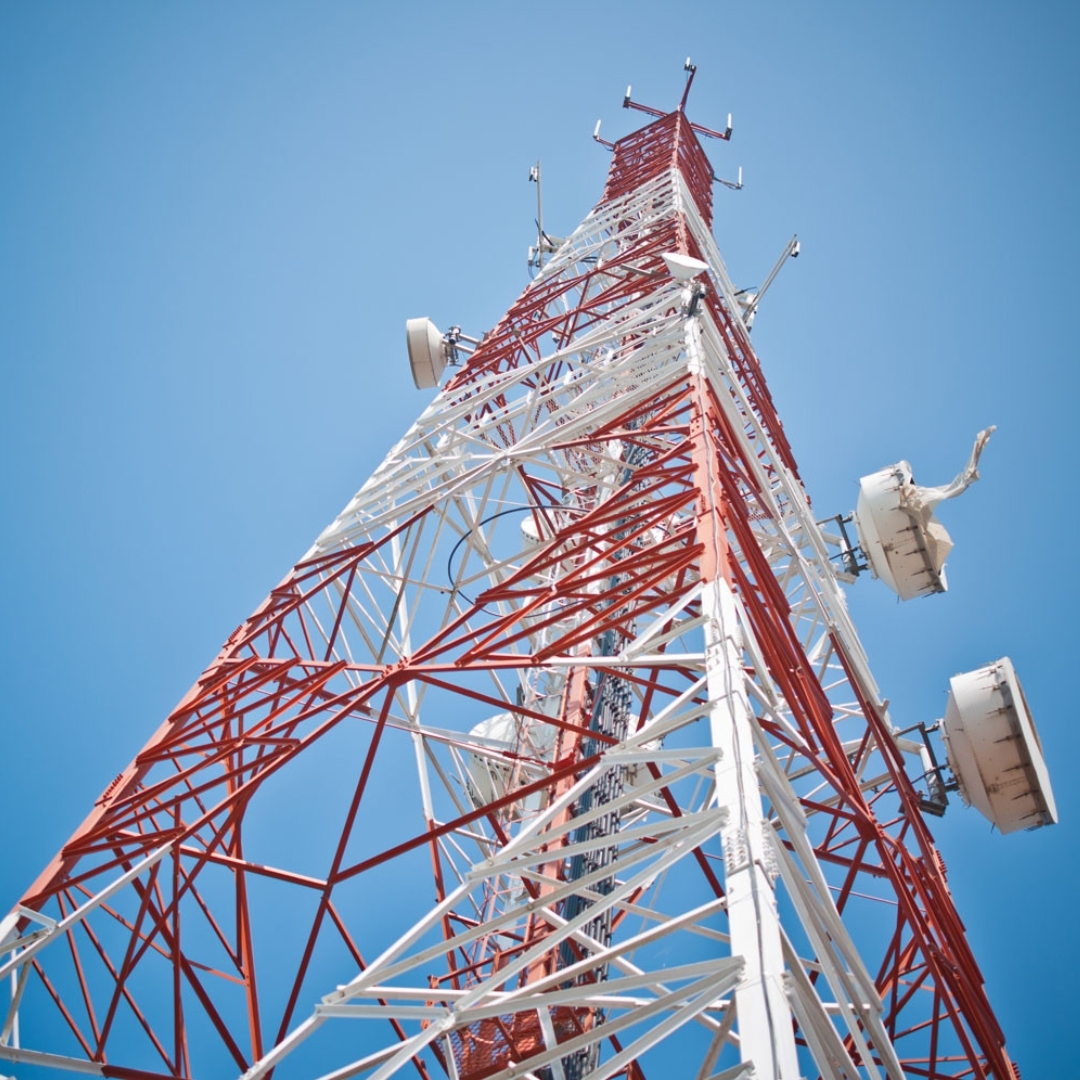
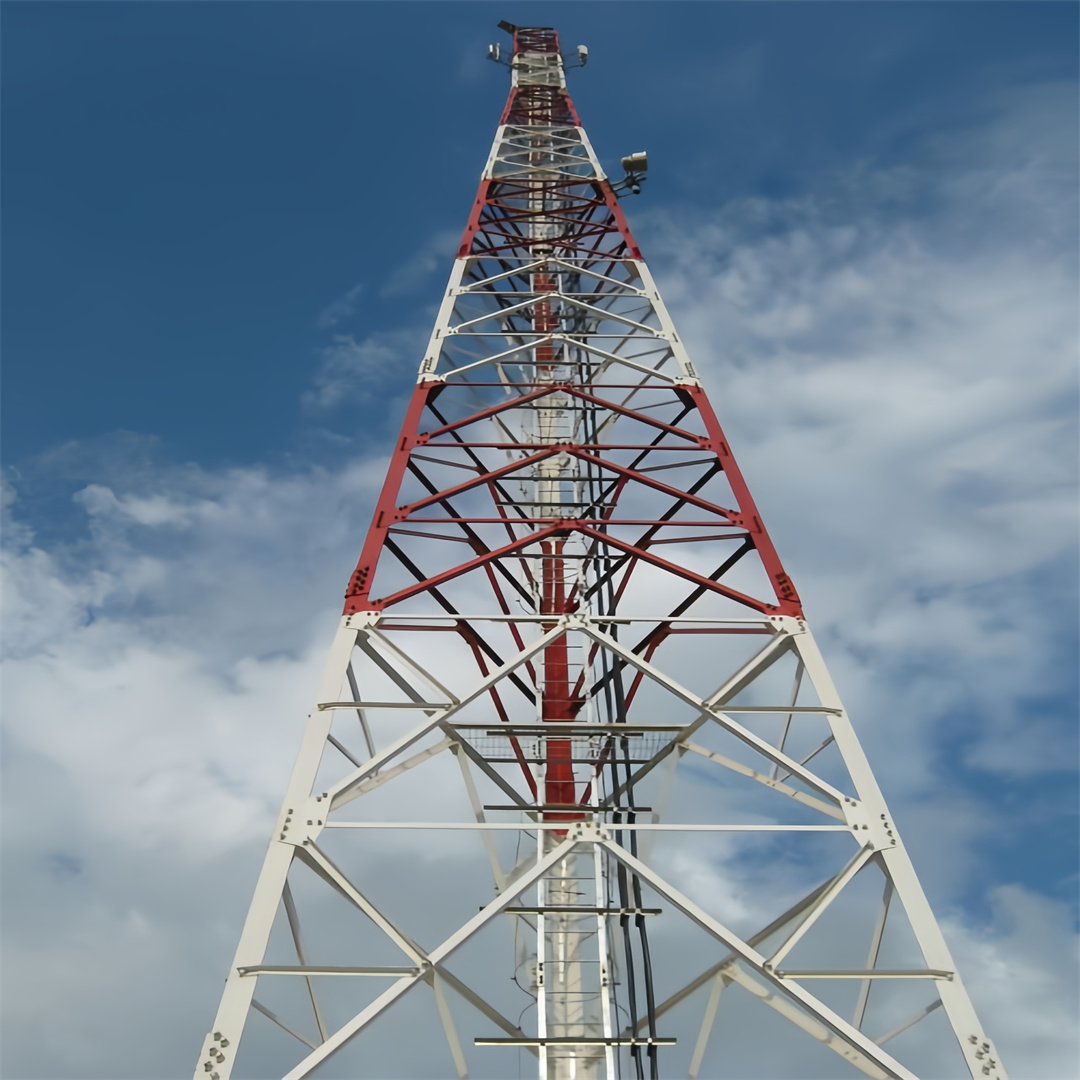
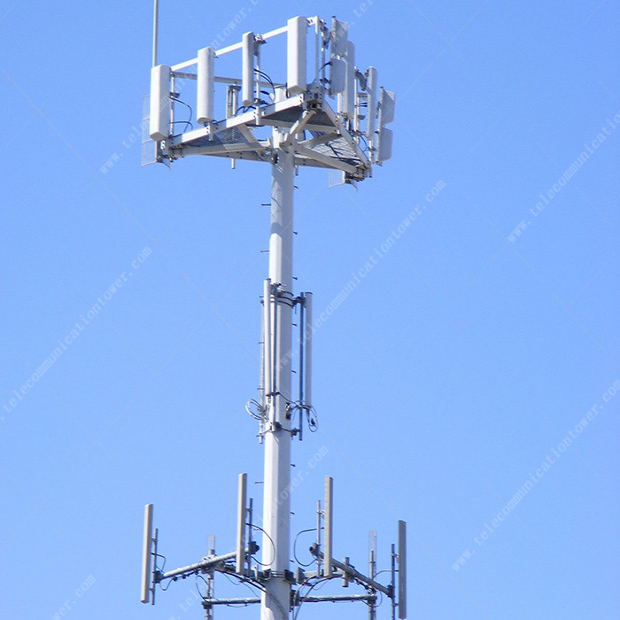
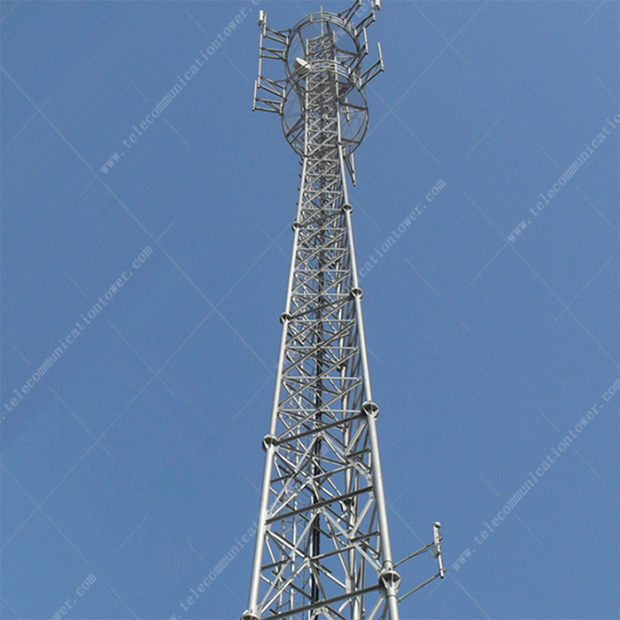
The installation quality of a telecom tower directly determines its structural safety, service life and long-term network stability. Even a well-designed and well-manufactured tower can suffer from hidden safety risks if installed improperly, leading to later tilt, bolt loosening, structural deformation or even failure.
As a professional telecom tower manufacturer with 10+ years of global project experience, JiaYao provides standard installation guidance and on-site technical support for all our tower products. This guide explains the standard installation workflow, key quality control points and common mistakes to avoid, helping engineering teams complete safe, compliant and high-quality tower construction.
Adequate preparation is the foundation of efficient and safe installation.
Site & Foundation Check
Confirm the site access road, hoisting space and foundation strength meet construction requirements. The foundation concrete must reach 100% of its design strength before hoisting.
Component Inventory & Inspection
Unpack and count all tower components according to the delivery list, and check for transportation damage, galvanizing layer defects and missing parts. All high-strength bolts must come with matching quality certificates.
Equipment & Personnel Preparation
Prepare cranes, torque wrenches, lifting slings, verticality measuring tools and safety equipment. All construction personnel must hold valid operation certificates and receive safety training before starting work.
The foundation is the supporting structure of the tower, and its accuracy directly affects tower verticality.
Check foundation dimensions, embedded part positions and concrete strength test reports.
Calibrate the position and elevation of anchor bolts. The allowable position deviation of anchor bolts is ≤2mm.
Clean the foundation surface and mark the tower center alignment lines to guide subsequent installation.
For guyed towers, inspect all anchor foundations at the same time to confirm their positions and bearing capacity meet design requirements.
Most lattice and monopole towers are assembled in sections on the ground first to reduce high-altitude work and improve efficiency.
Assemble tower segments in order from bottom to top, and connect members with high-strength bolts. Do not fully tighten bolts at this stage to leave adjustment margin.
For lattice towers, install cross bracing and auxiliary components synchronously to ensure the segment shape is correct.
Inspect the flatness and diagonal dimensions of each assembled segment. The allowable deviation of segment length is ≤1/1000 of the total segment length.
Pre-install antenna brackets, cable clamps and ladder sections on ground to reduce high-altitude workload.
Hoisting is the core and highest-risk step of installation. It must be carried out in strict accordance with lifting plans.
Segmental hoisting: The most widely used method. Lift and connect each tower segment one by one from bottom to top, suitable for most lattice and monopole towers.
Integral hoisting: Assemble the full tower on the ground and lift it into place as a whole, suitable for short and medium-height towers with sufficient site space.
Flipping erection method: Used for guyed masts and tall slender towers, tilting the tower from horizontal to vertical with a gin pole.
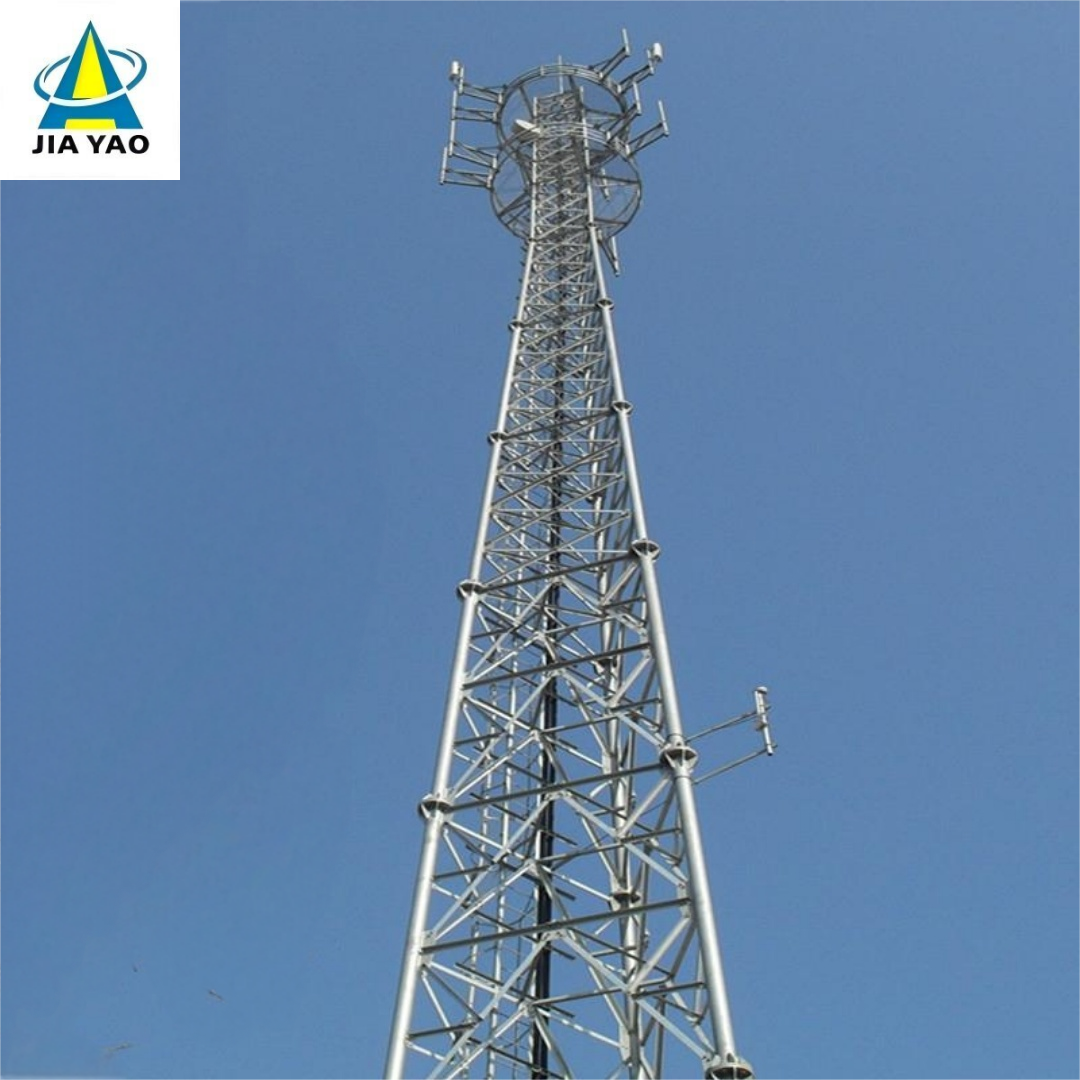
The crane capacity must have at least 1.5x safety margin for the maximum lifting weight.
Lift slowly and smoothly, avoid sudden acceleration or swing. No one is allowed to stand under the lifting load.
Align bolt holes accurately during butt joint. Forcible hammering is prohibited to avoid damaging bolt holes and galvanized layers.
Tighten all connecting bolts after each segment is aligned and stabilized before continuing to lift the next segment.
Tower verticality is the core index of installation quality, and must be strictly controlled.
Use a theodolite or total station to measure tower verticality from two perpendicular directions.
The maximum allowable vertical deviation is ≤1/1000 of the total tower height, which is a mandatory requirement of ANSI/TIA-222-G and most international standards.
Adjust verticality by adding shims under the base flange or adjusting anchor bolt nuts.
After verticality meets the standard, perform final tightening of all high-strength bolts with a torque wrench according to the design torque value. Mark tightened bolts to avoid missing or re-tightening by mistake.
After the main tower body is installed, install auxiliary facilities and functional systems.
Safety access system: Install climbing ladders, safety cages, rest platforms and anti-climb doors.
Antenna & cable system: Install antenna mounts, cable trays and feeder clamps, and arrange cables neatly according to design drawings.
Lightning protection system: Connect down conductors, grounding leads and equipotential bonding points, and complete the connection with the foundation grounding grid.
Warning facilities: Install aviation warning lights, warning signs and fall protection devices according to project requirements.
A comprehensive acceptance inspection must be carried out before the tower is put into use.
Appearance inspection: Check for galvanizing layer damage, component deformation and missing parts.
Structural dimension inspection: Recheck tower verticality, height and crossarm position accuracy.
Bolt quality inspection: Randomly check 10% of high-strength bolts for torque value compliance.
System test: Test grounding resistance ≤10Ω for standard sites) and lightning protection system continuity.
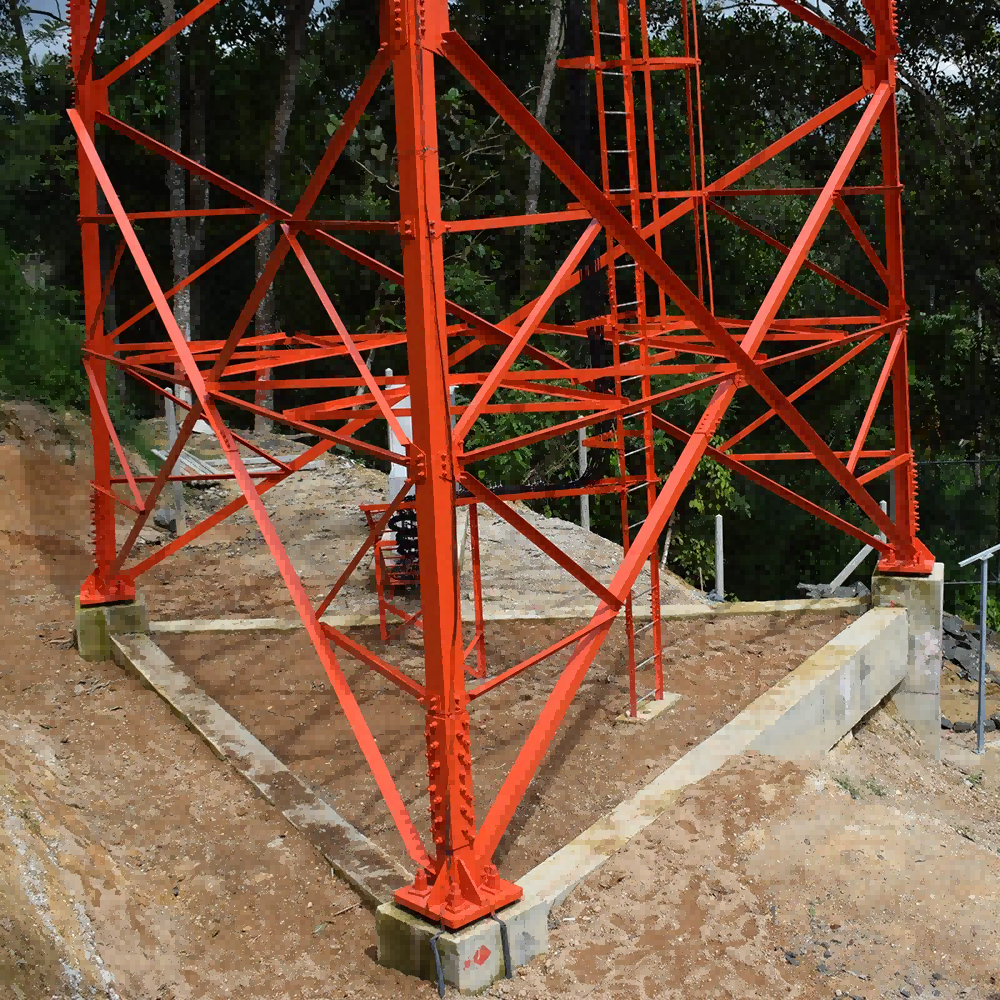
Modular Design 3 Legged Telecom Tower For 5G Private Network Deployment
Foundation acceptance report
Tower installation record and verticality test report
Bolt tightening inspection record
Grounding resistance test report
Product quality certificates and as-built drawings
High-Strength Bolts
All Grade 8.8/10.9 bolts must be tightened with a calibrated torque wrench. Re-torque 10% of bolts randomly, and unqualified bolts must be re-tightened 100%.
Galvanized Layer Protection
Avoid knocking and scratching during hoisting and installation. Any damaged galvanized area must be repaired with zinc-rich paint(≥95% zinc content) in time. On-site welding is not allowed unless absolutely necessary; welding areas must be derusted and re-galvanized or painted.
Environmental Restrictions
Hoisting work is prohibited when wind speed exceeds 10m/s, or in rain, fog and other low-visibility weather.
Safety Protection
All high-altitude workers must wear full safety harnesses. Safety warning lines must be set around the construction site to prohibit irrelevant personnel from entering.
Hoisting before foundation reaches full strength
This is the most common cause of later foundation settlement and tower tilt. The concrete curing period must be strictly followed.
Under-tightened or missed bolts
Loose bolts are the leading cause of structural fatigue and failure under long-term wind vibration. Final tightening and marking must be strictly implemented.
Ignoring galvanizing repair
Scratches and welding spots without anti-corrosion treatment will become rust starting points and greatly shorten service life.
Excessive vertical deviation
Small vertical deviation will gradually enlarge under long-term wind load, leading to uneven stress and structural damage.
To help global customers complete high-quality tower installation, JiaYao provides full technical support:
Detailed installation manuals: All towers are delivered with illustrated installation guides and bolt torque tables.
Remote technical guidance: 24/7 online engineering support to solve on-site problems in time.
On-site supervision: Senior engineers can be dispatched to guide installation for large-scale projects.
Acceptance support: Provide standard acceptance forms and test specifications to help customers complete handover smoothly.
Standardized installation is the last and most critical step to ensure the long-term safe operation of telecom towers. By following scientific construction procedures, strictly implementing quality control standards and avoiding common mistakes, engineering teams can deliver safe, reliable and durable telecom infrastructure.
If you need professional installation guidance or customized tower solutions for your projects, contact JiaYao today. Our engineering team will provide full technical support to ensure the success of your project.