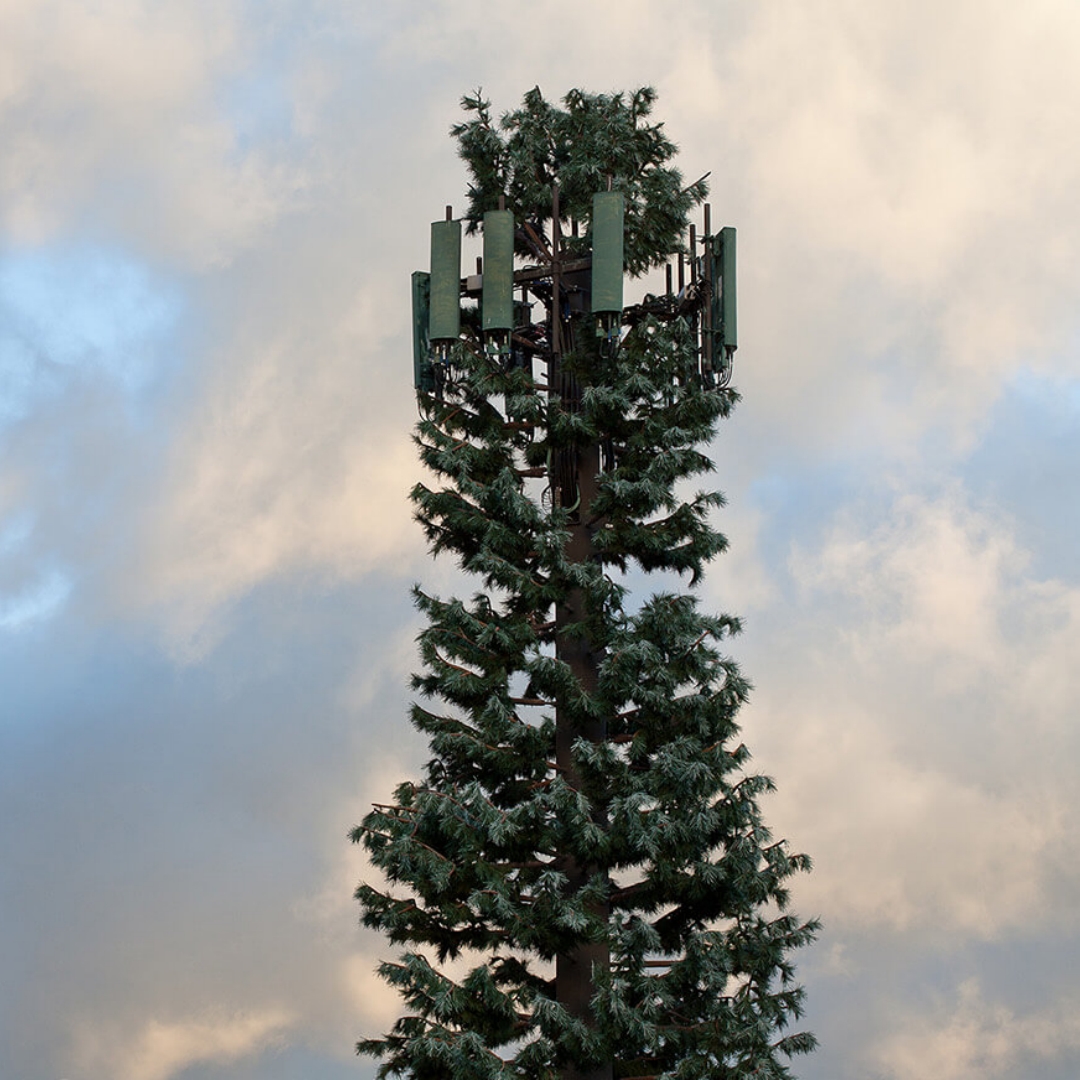
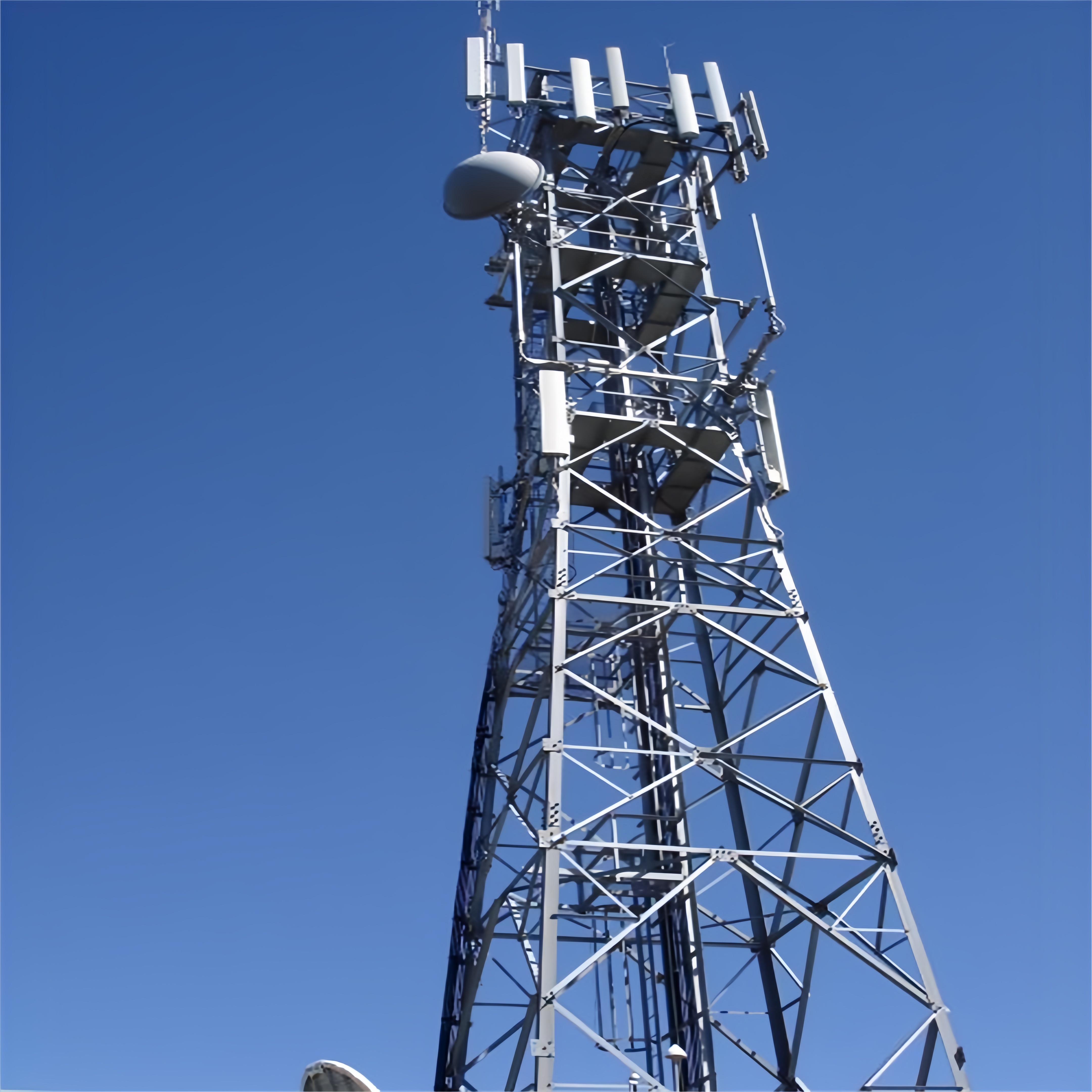
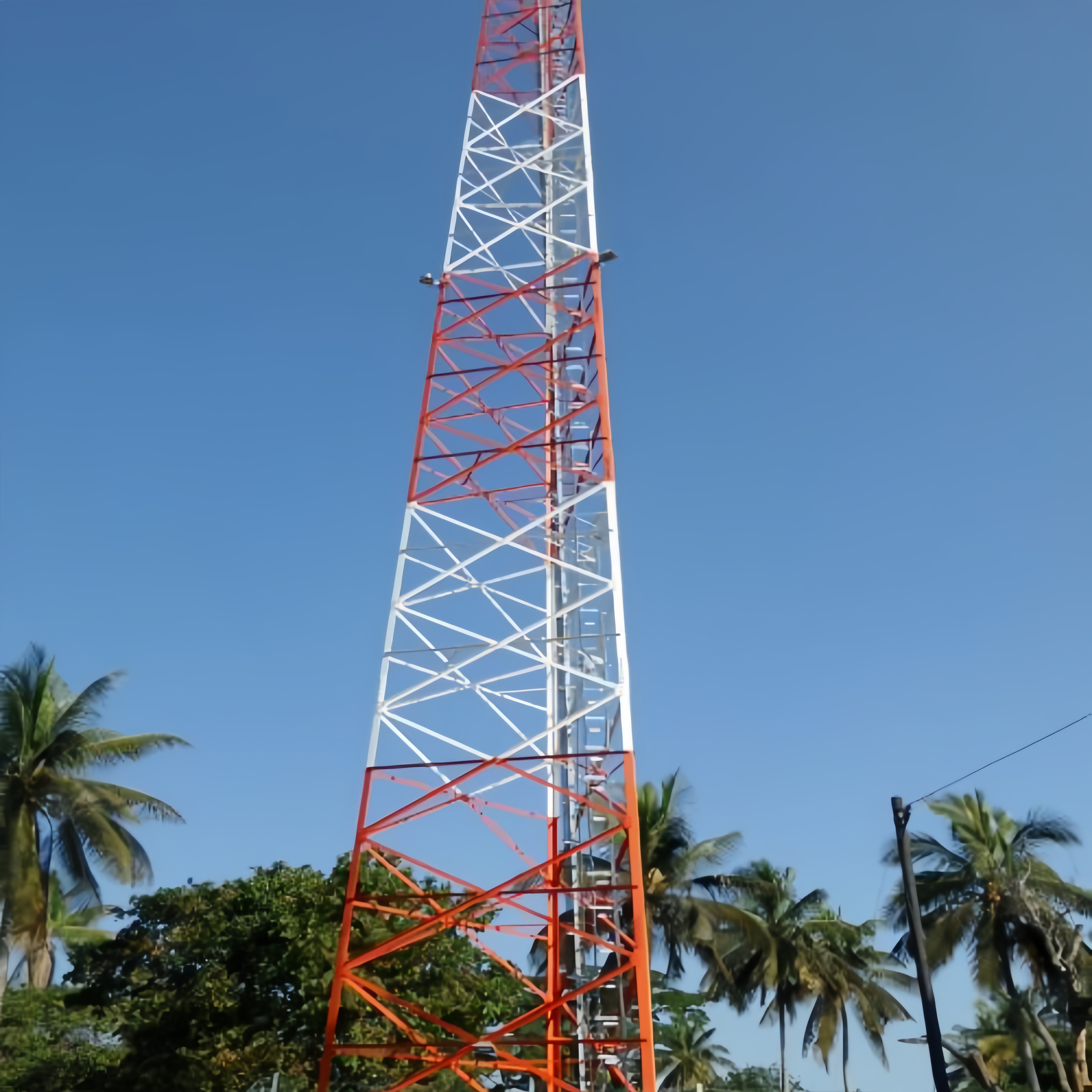
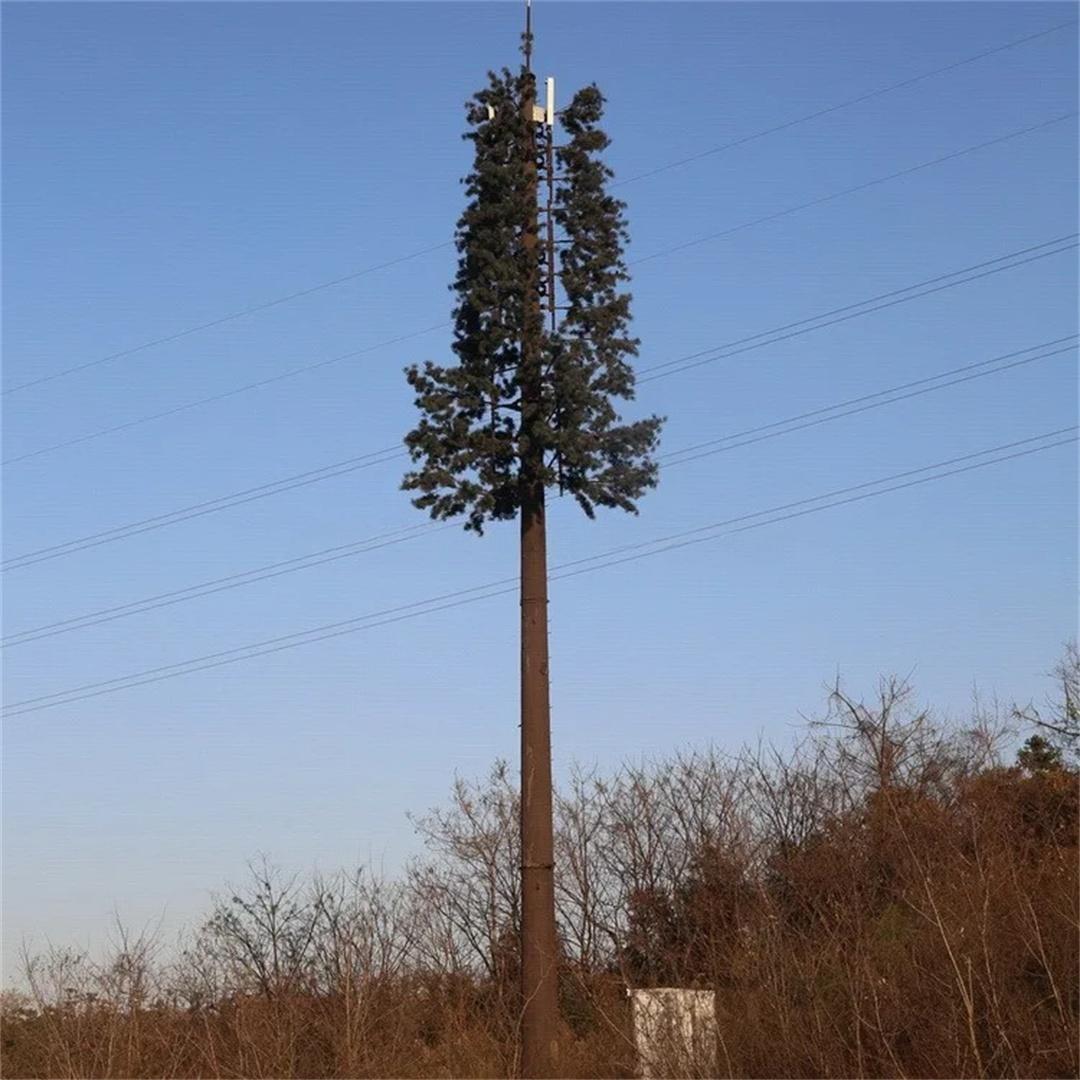
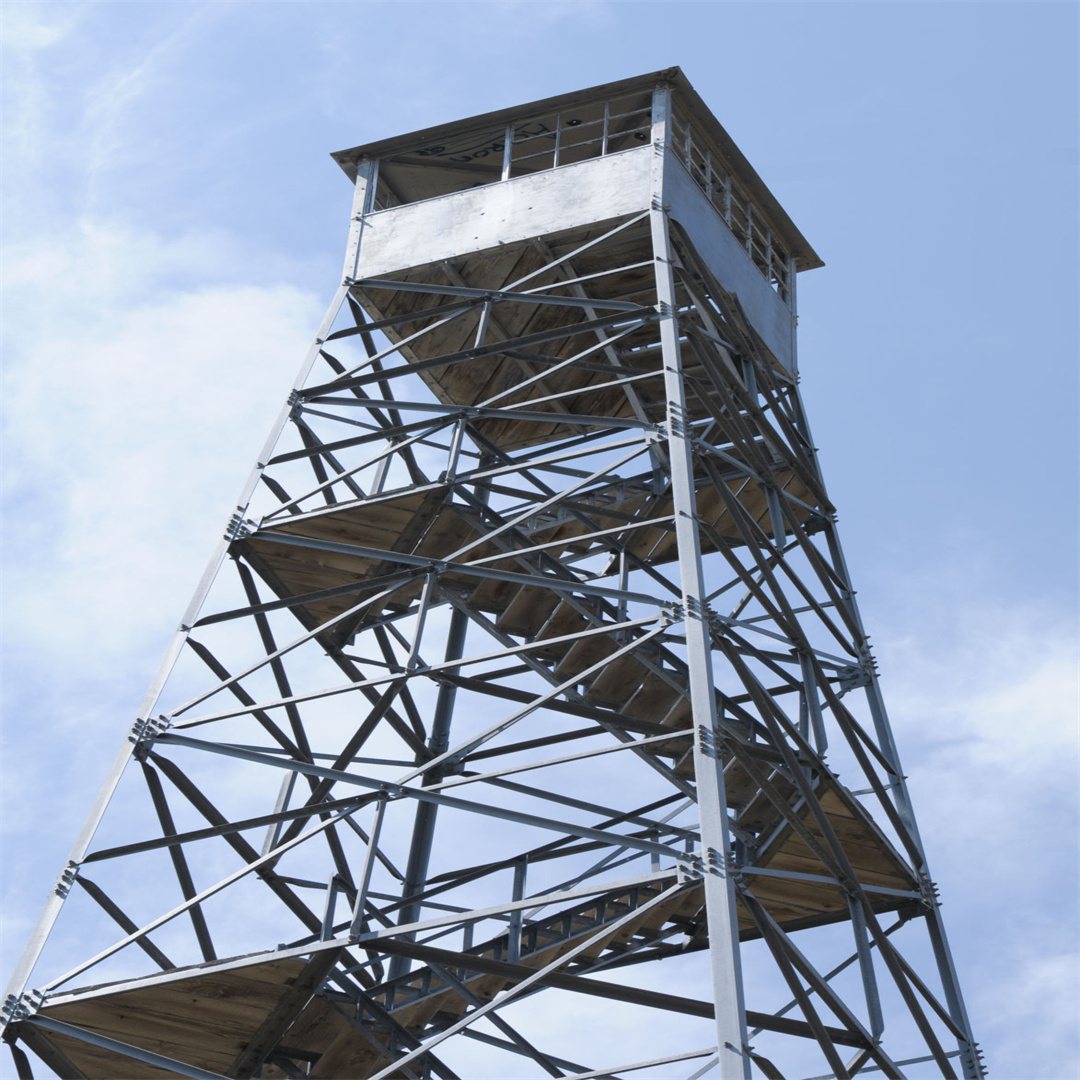
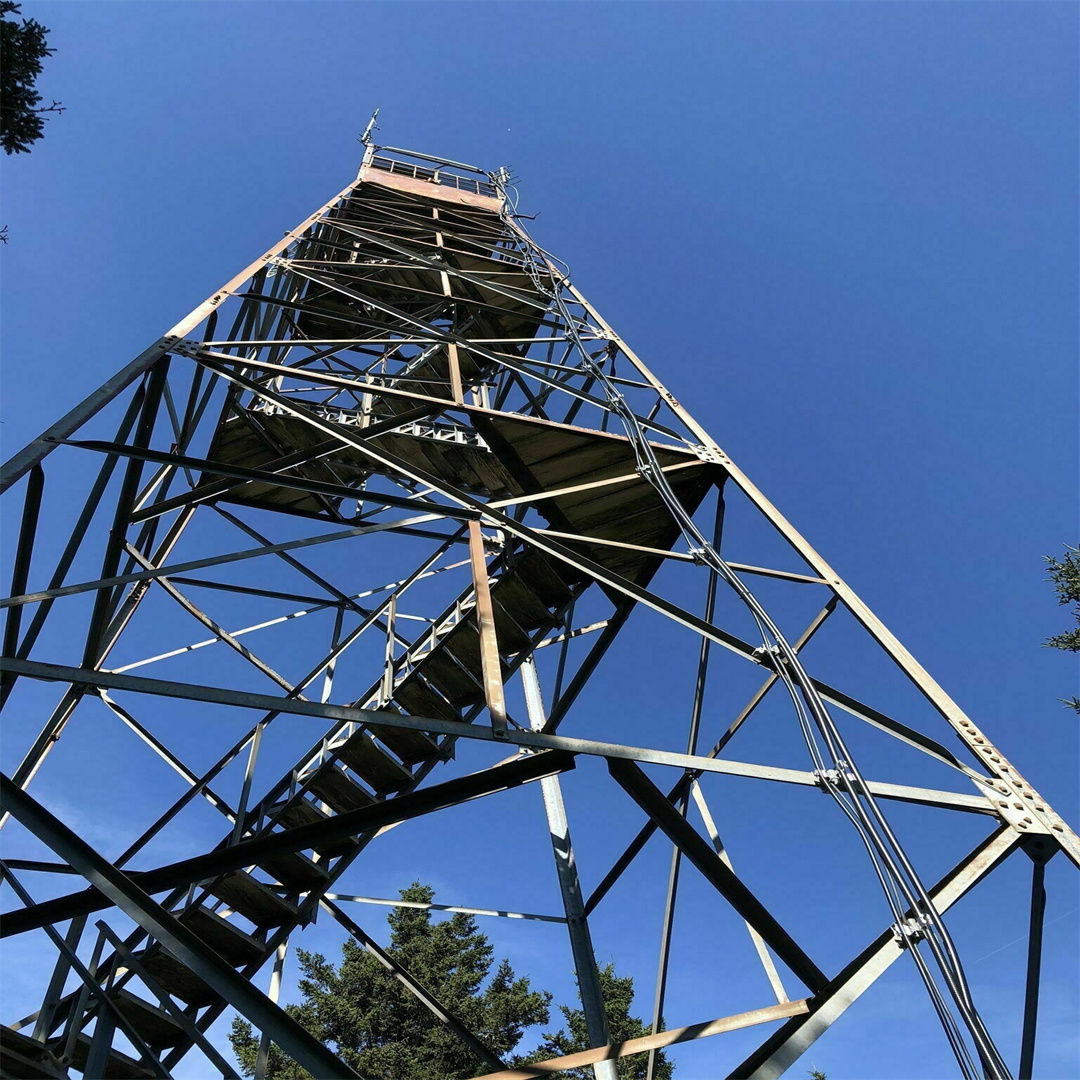
Lightning strikes are one of the leading causes of telecom tower equipment damage, network downtime and safety hazards. As tall elevated structures exposed to open air, communication towers face high lightning strike risk, and a properly designed lightning protection system is critical to safeguard equipment, protect personnel and ensure uninterrupted network operation.
At JIAYAO, all our telecom towers are engineered with standardized lightning protection systems that meet strict global safety codes, with customized solutions available for special climate and terrain conditions. This guide breaks down the core components, design standards, tower-specific solutions and maintenance rules for telecom tower lightning protection, helping operators build safe, durable communication infrastructure.
A complete lightning protection system works through four coordinated layers: intercepting lightning, conducting current safely to the ground, suppressing surge voltage, and eliminating potential difference.
Installed at the highest point of the tower, the air termination system intercepts direct lightning strikes and guides the current into the down conductor system.
Standard configuration: A 1–2m solid steel lightning rod mounted at the tower top, with a protection angle calculated to cover all antennas and equipment on the tower.
Enhanced options: Multi-rod lightning protection arrays or early streamer emission (ESE) arresters for high-lightning-activity regions.
Material requirement: Hot-dip galvanized steel or stainless steel for long-term corrosion resistance.
Down conductors carry lightning current from the air terminal down to the grounding system with minimal resistance.
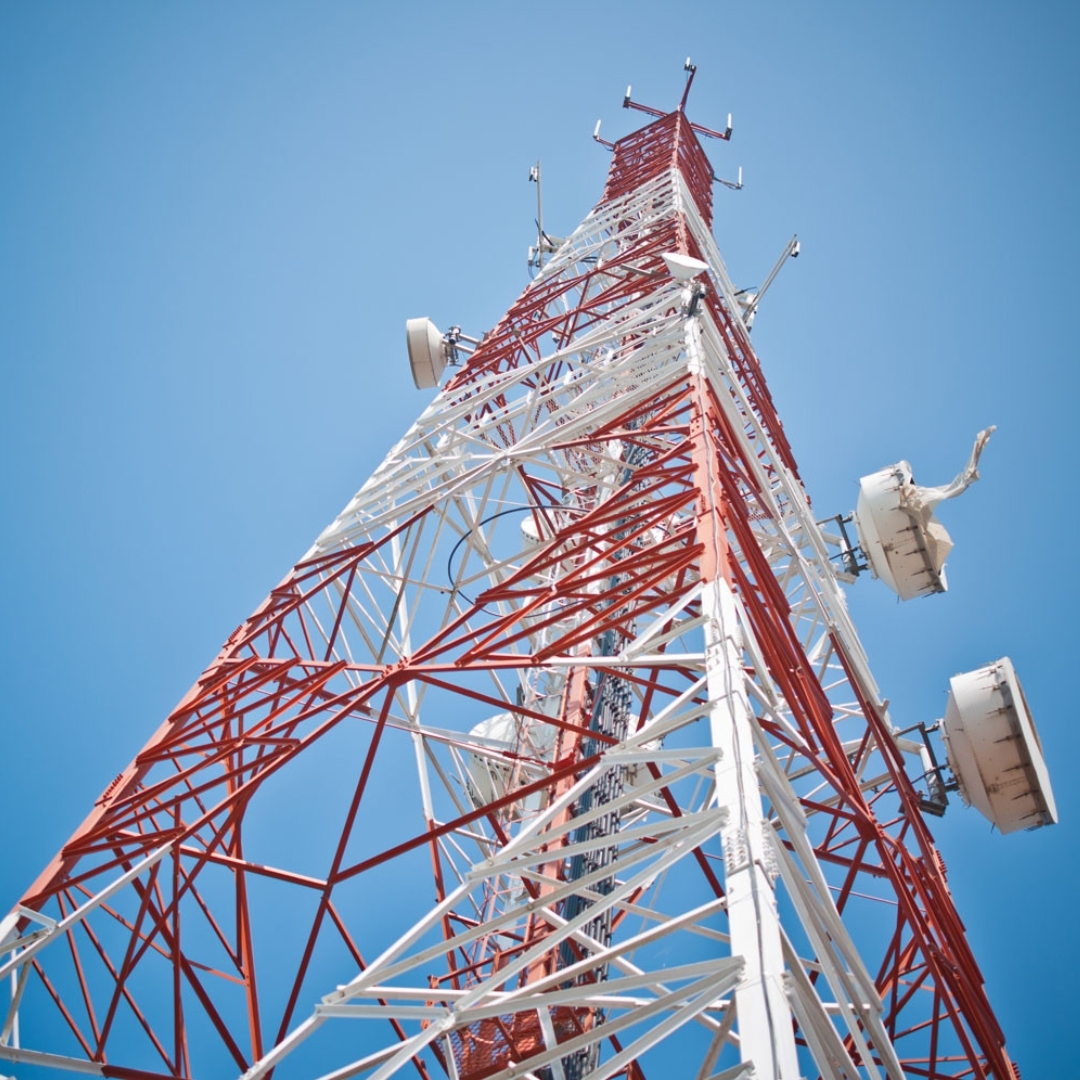
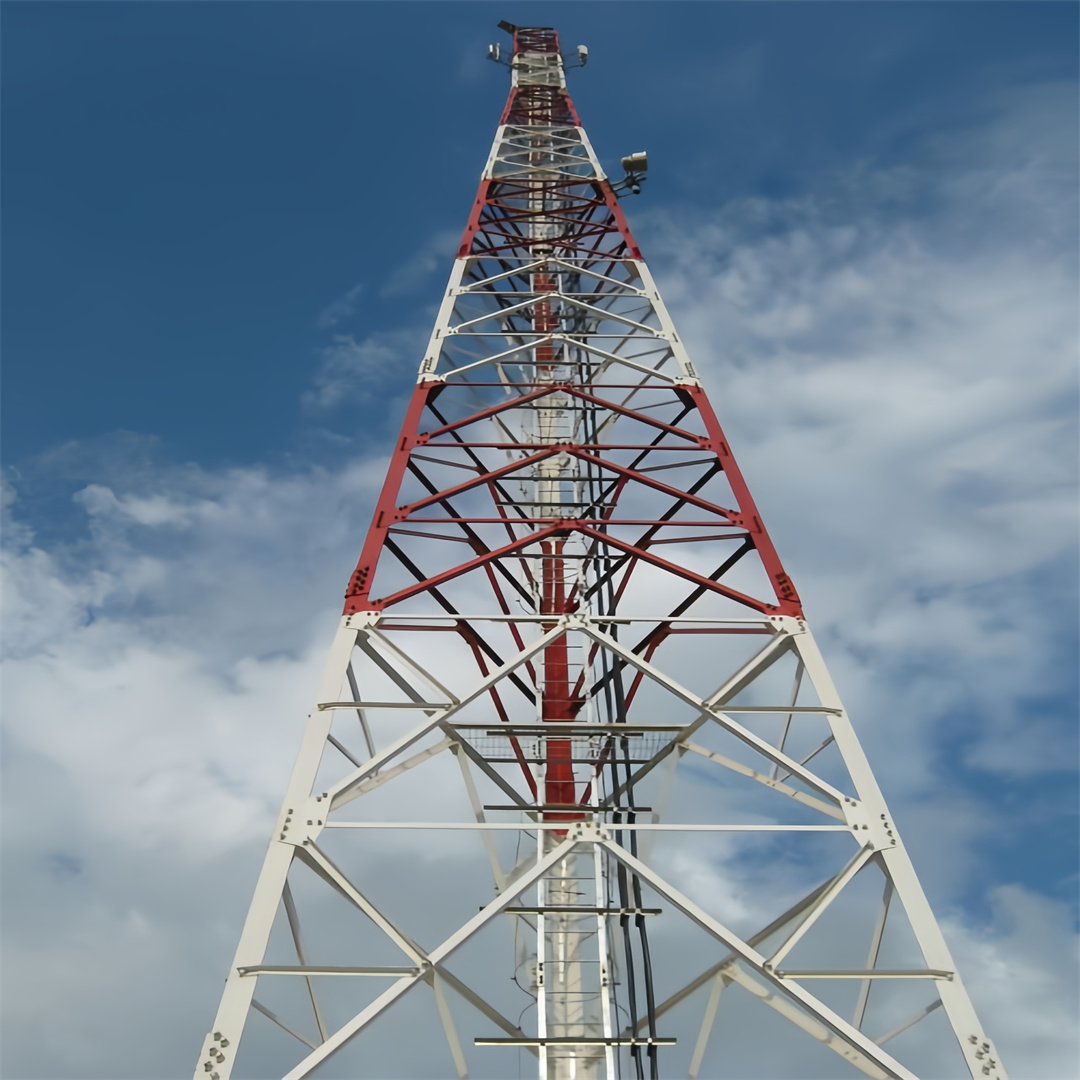
For lattice towers: Tower main legs serve as natural down conductors, with dedicated conductive paths welded at all connection points.
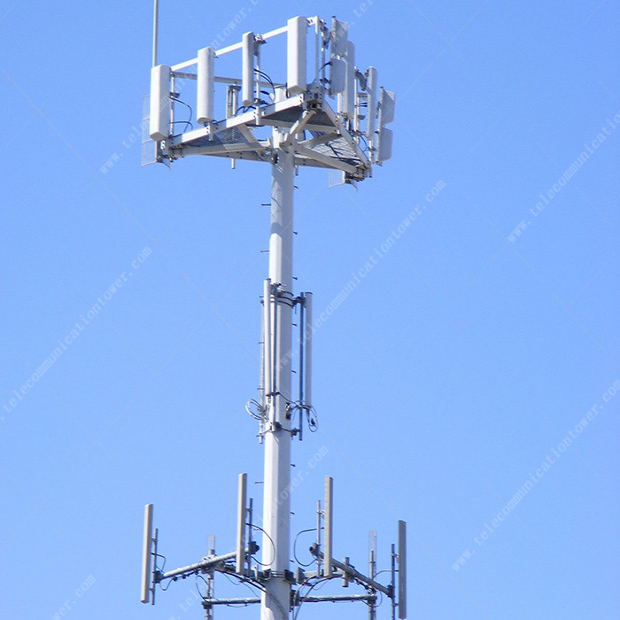
For monopole towers: The tower body itself acts as the main down conductor, with additional internal copper conductors for equipment grounding.
Design rule: Minimum cross-section of 50mm² for steel conductors and 35mm² for copper conductors to handle peak lightning current.
The grounding system dissipates lightning current into the earth safely, and is the most critical part of the entire protection system.
Standard configuration: Ring-shaped grounding grid around the tower foundation, made of galvanized flat steel or copper-clad steel, with multiple vertical grounding electrodes.
Performance requirement: Ground resistance ≤10Ω for standard telecom sites, and ≤4Ω for sites with sensitive electronic equipment.
Soil adaptation: Chemical grounding agents and extended grounding grids for high-resistance soil such as rock and sand.
SPDs protect electronic equipment from induced lightning surges on power and signal cables.
Power line SPDs: Installed at the base equipment cabinet and power input end to suppress power surges.
Signal line SPDs: Installed on antenna feeder cables, optical fibers and data lines to protect communication equipment.
Multi-level protection: Class B+Class C cascaded protection for sites in high-lightning-risk areas.
All metal components on the tower — including antenna brackets, equipment enclosures, cable shields and ladders — are bonded together to eliminate dangerous potential differences during a lightning strike.
All JiaYao lightning protection systems are designed in compliance with widely recognized global standards:
IEC 62305: International standard for lightning protection, defining protection levels (LPL I–IV) and design rules.
ANSI/TIA-222-G: North American telecom tower structural standard, including lightning protection requirements.
GB 50057: Chinese national code for lightning protection of buildings, widely referenced in Asian and African markets.
ITU-T K.27: ITU standard for lightning protection of telecommunication facilities.
We provide full calculation reports and third-party test certificates for all customized lightning protection solutions.
The tapered steel shaft serves as the main down conductor, with a dedicated lightning rod at the top.
All internal cables are shielded and grounded at both the top and bottom of the tower.
A ring grounding grid is installed around the base foundation, connected to the tower base flange via multiple grounding leads.
SPDs are installed inside the base equipment cabinet for both power and signal lines.
Multiple main legs act as parallel down conductors, providing lower resistance and higher current capacity.
Lightning rods are installed at all highest points of the tower top crossarms to ensure full coverage of all antenna positions.
Grounding leads are connected to each tower leg for uniform current dispersion.
All antenna mounts and equipment platforms are equipotentially bonded to the tower body.
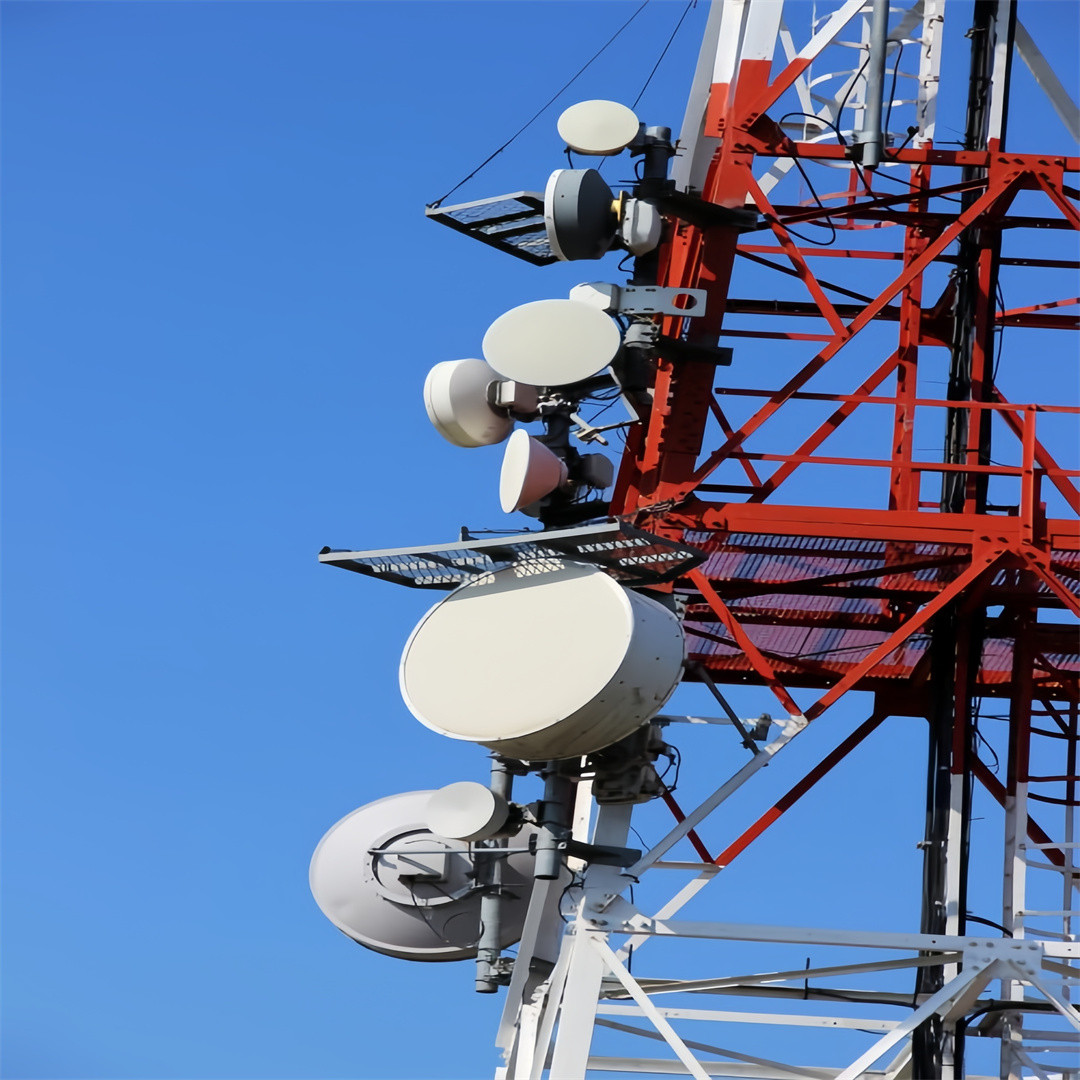
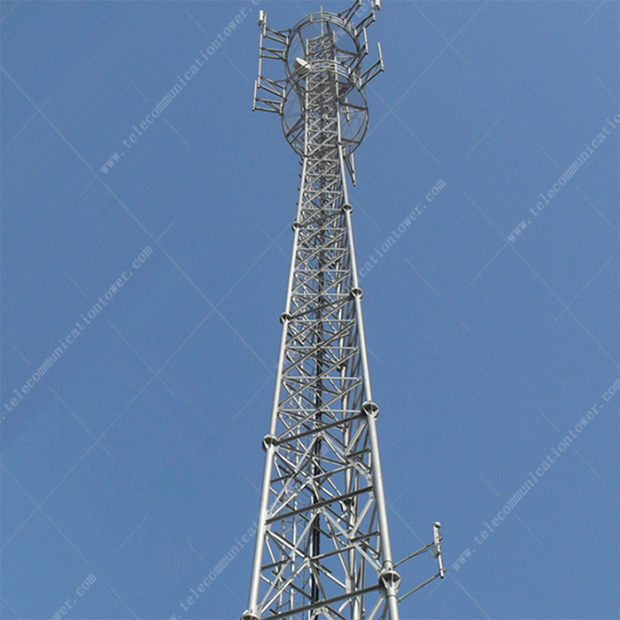
The tower mast serves as the main down conductor, with lightning rods at the top.
Guy wires are insulated from the mast at upper sections and grounded at the anchor ends to avoid induced current damage.
Separate grounding electrodes are installed at each guy anchor point.
Special attention is paid to insulation between guy wires and equipment cables to prevent lightning current coupling.
The tower body is connected to the building’s existing lightning protection system and reinforcement steel bars.
A dedicated equipotential bonding busbar is installed at the tower base, connected to the building’s main grounding grid.
SPDs with higher protection levels are used to protect building electrical systems from surge damage.
All rooftop metal facilities (railings, pipes, equipment) are bonded to the same grounding system.
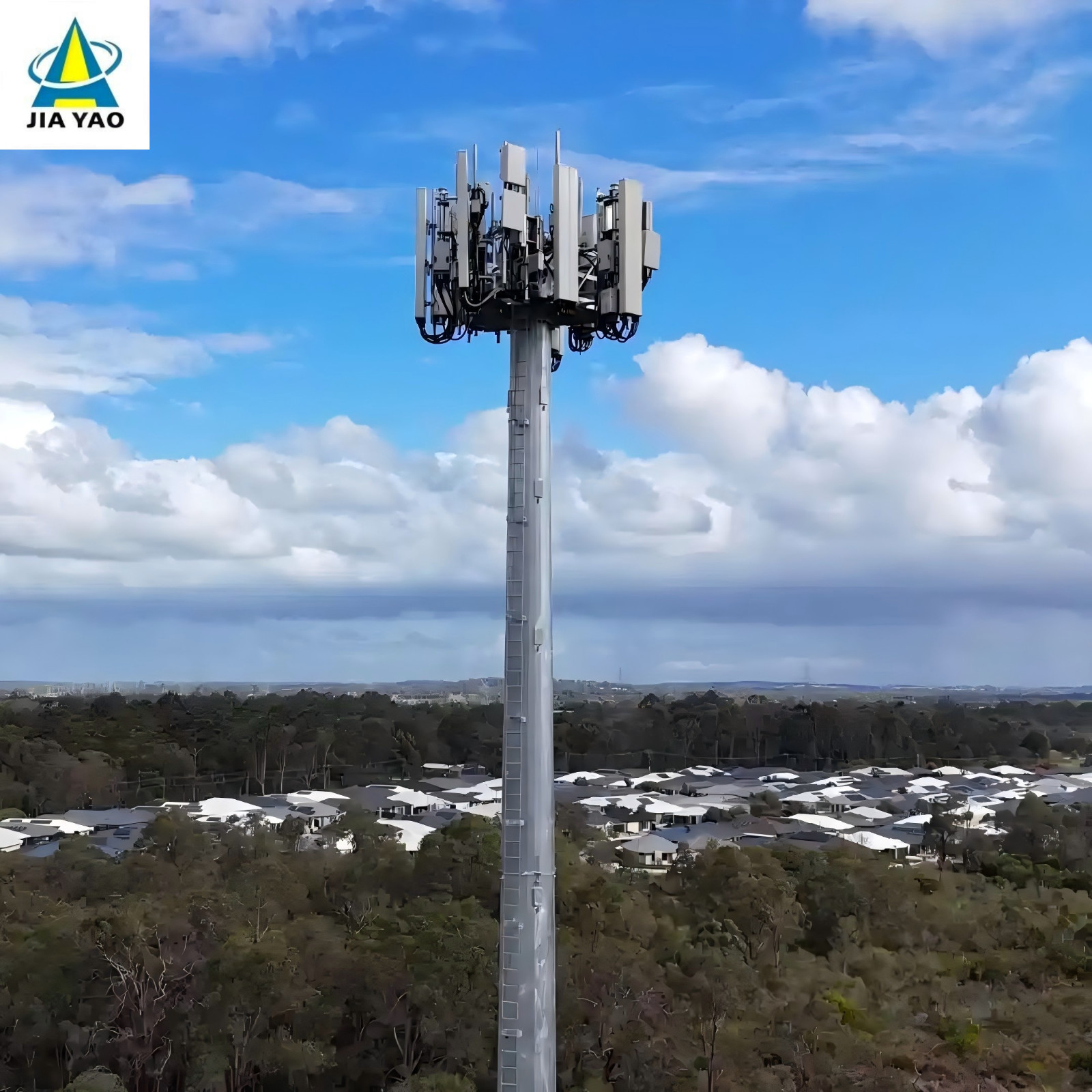
Lightning Protection Monopole Tower For Shopping Mall 5G Base Station
Only focusing on the lightning rod, ignoring grounding quality
A low-quality grounding system with high resistance cannot dissipate lightning current safely, even with a high-quality lightning rod. Ground resistance testing is mandatory before putting the tower into service.
Missing equipotential bonding
Unbonded metal parts create dangerous potential differences during a lightning strike, which can cause electric arcs and equipment damage.
Using undersized down conductors
Undersized conductors may overheat or even melt during a strong lightning strike, leading to system failure.
Neglecting surge protection for signal lines
Most lightning damage to communication equipment is caused by induced surges on signal cables, not direct strikes on the tower.
Using dissimilar metals without isolation
Direct connection between copper and steel causes galvanic corrosion over time, degrading grounding performance.
Proper maintenance ensures the lightning protection system remains effective throughout the tower’s 30+ year service life:
Quarterly visual inspection
Check the lightning rod for deformation or corrosion, verify the integrity of down conductor connections, and inspect grounding leads for damage.
Annual ground resistance test
Test ground resistance during dry seasons. If resistance exceeds the design value, supplement grounding electrodes or use grounding improvement agents.
Bi-annual SPD inspection
Check SPD status indicators and replace failed units in time. Test surge protection performance every 3 years.
Post-storm inspection
After severe thunderstorms, inspect the tower, connectors and equipment for lightning damage before restoring full operation.
5-year full system audit
Conduct a comprehensive inspection of all components, including weld integrity, corrosion status and equipotential continuity.
As a full-service telecom tower manufacturer, JiaYao provides end-to-end lightning protection support:
Standard configuration: All towers come with factory-installed lightning rods, grounding connectors and bonding fittings as standard.
Custom design: Our engineering team designs tailored lightning protection schemes based on local lightning activity, soil conditions and project requirements.
Full documentation: We provide complete lightning protection calculation reports, construction drawings and compliance certificates.
Global compliance: Solutions can be customized to meet IEC, ANSI, Eurocode and other regional standards.
A reliable lightning protection system is an indispensable part of telecom tower infrastructure, directly related to equipment safety, network stability and on-site personnel safety. By following standard design principles, selecting appropriate configurations for different tower types and implementing regular maintenance, operators can effectively reduce lightning risks and ensure long-term stable operation of communication networks.
If you need customized lightning protection solutions for your telecom tower projects, contact JiaYao today for professional design support and quotation.